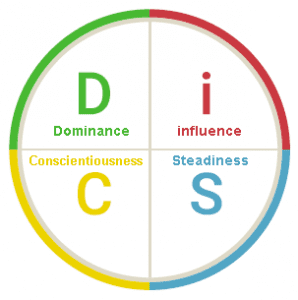
Four DiSC Personality Types | What They Represent

DiSC Personality Types Circular Graph
DiSC Circular Model

DiSC is a behavioral-based learning assessment that is offered in many forms. The DiSC Assessment helps people identify their DiSC personality type or style by completing a series of questions. Occasionally referred to as the DiSC Personality Profile, the assessment helps people:

  • Understand their behavior style(s), also often called personality types.
  • Discover how to adapt their behavior to improve communications.
  • Learn about other DiSC personality types to help them understand why people do the things they do and why they think the way they think.
  • Enhance their performance, and their team’s performance, through their newfound understanding and improved communications.
  • Reduce conflict in their personal and work relationships.

This model focuses on four distinct DiSC personality types. The four distinct personality types are represented in the DiSC circular model pictured here.

Several DiSC-based assessments exist in the market today and their terminology varies from one flavor to the next. Most of these assessments use similar terms to identify the four personality types. Basically, the general theme is the same. However, the assessments and the corresponding reports vary a lot. Some DiSC personality types even use colors or animals to represent the four different personalities. I’ve never been a fan of the colors or the animals but they do appeal to some. These assessments are not all created equally but we’ll discuss the differences in another post.

What does the “D” style represent?

Someone with a “D”, or Dominance style, will be focused on achieving results and taking action quickly. We all know this personality type. It may be ourselves, a co-worker, or maybe even our boss. The word dominance is a perfect descriptor because D’s are often perceived as being dominant in the workplace and in their personal relationships. They’re motivated by competition, winning, and success.

Individuals having “D” DiSC personality types are typically direct and to the point. This means they would prefer you to be direct and to the point when you are communicating with them. Imagine how effective a salesperson would be if they adapted their communications to appeal to others. Adjusting tone, or even the number of words, can make communications much more appealing to the person on the receiving end.

If you haven’t noticed already, the dominance personality type, as with all of the DiSC personality types, has its drawbacks. People identifying with the “D” style often come across as having little or no concern for others. Sometimes they can appear impatient and insensitive. Often these people do not realize how they’re perceived. One of the benefits of learning about your DiSC personality type is recognizing the negative aspects of your own behaviors. Understanding their style can help D’s to slow down and be more sensitive to the people around them.

What does the “i” personality type represent?

The small “i” indicates the Influence style. People demonstrating the “i” type often express their enthusiasm openly and they’re usually very friendly people. You might refer to them as a “people-person”. Influencers prefer to act on things quickly and they inspire collaboration in the workplace. People identified with the Influence style enjoy talking and working closely with others. It’s important to them to be recognized socially, especially in the workplace. They put a premium on public recognition.

Things you may notice about someone with the “i” personality type:

  • They often come across as charming.
  • They show enthusiasm in most of the things they do.
  • They’re often more optimistic than most.
  • They can be talkative.

As with the “D” personality type, influencers also have their drawbacks. They can appear to be impulsive and disorganized. If they don’t take deliberate measures to stay organized, they have a tough time following through on tasks and projects. Often people with the “i” style do very well in sales positions. However, it’s important to note that the DiSC Personality Assessment is a tool to help people gain understanding. It’s not a perfect prediction model for success in a particular job. The assessment can certainly help provide that type of insight. Although it’s much more effective to use an assessment specifically designed for selecting and hiring employees.

What does the “S” DiSC personality type indicate?

The “S” stands for Steadiness. You can probably guess the characteristics of the “S” style. These people enjoy providing support and maintaining stability. A stable workplace environment is very important to people with the “S” personality type. As an employee, they prefer receiving feedback from their supervisor regularly. They’re also consistently looking for ways they can help others.

Individuals with the “S” personality type tend to be more concerned by change than most. If you think about it, that makes perfect sense considering they prefer stable situations and environments. They tend to shy away from conflict and may be overly sensitive to feedback. Maintaining harmony and keeping the peace is important for people who exhibit “S” style characteristics.

As with all of the four DiSC personality types, characteristics viewed as strengths can lead to negative perceptions from others. For instance, people exhibiting the “S” personality type are often viewed as over accommodating. Their desire for stability can make them resistant to change. The S’s will often avoid change altogether. They subscribe to the “if it isn’t broken don’t fix it” approach.

The “C” Personality Type

The “C” in the DiSC acronym stands for Conscientiousness. People with the conscientiousness personality type tend to place priority on accuracy, maintaining stability, and challenging assumptions. They are motivated by opportunities to use their expertise whether it’s at work or at home. People identifying with the “C” personality type desire activities where they can use their expertise to produce quality results.

Being wrong, being criticized, and working with slipshod projects are all fears for people possessing the “C” style. They place a premium on doing things the right way regardless of how long it takes. People with the “C” style often refer to themselves as perfectionists. They’re good at tasks that involve detailed analysis and precision but try not to ask them to do something that needs to be completed right away.

People often notice that C’s operate in a quiet and reserved manner. They prefer to work alone rather than working in a group. Occasionally they can come across as skeptical and overly critical. Sarcasm is a trait that can help you identify someone with the “C” personality type. Colleagues who possess the “C” style can appear as:

  • Private
  • Methodical
  • Skeptical
  • Precise

Since they place a high level of importance on ensuring accuracy, C’s can tend to overanalyze. Recognizing this potential problem will help people with the “C” style avoid being bottlenecks within an organization.

Learn More About DiSC

DiSC is an assessment model that has been used by individuals and corporations for 40+ years. As people begin to understand their personality type they also begin to recognize other people’s DiSC personality types. This knowledge helps them grow professionally and personally. It improves their ability to communicate and makes them much better at working with others. Relationships improve and they become more effective in their careers. It’s an interesting and amazing transformation.

Discover your DiSC Personality Type

“DiSC” is a registered trademark of John Wiley & Sons, Inc.

After a Pause on Hiring, Reset and Restart

When the pandemic began, it abruptly threw businesses into turmoil. Workers went remote. Hiring in many industries was put on hold. Management focused on how to stay afloat and move forward. Now that states are starting to reopen and move towards a sense of normalcy, businesses are lifting the pause button, resetting, and starting to hire again. If you’re one of them, here’s what we suggest:

hiring reset after covid

Consider hiring remote workers1. Instead of bringing people on board and planning for them to eventually come to the office, you can add permanent telecommuters to the team. Unsure? Try a candidate out as a freelancer. Start with an experienced remote worker, communicate your business’s values, and establish guidelines. Also, be sure to convey your corporate culture and to verify a candidate’s identity.

Use a hiring tool. In the best of times, it’s a challenge to make sure you bring the right people on board. Now, without meeting candidates in person, you want as much insight as possible at your disposal as you decide who to hire. We recommend PXT Select™, an online hiring assessment designed to help you select the best candidates for your organization. It not only assesses thinking style (e.g. verbal reasoning), but also behavioral traits (e.g., independence), and interests (e.g., technical). It measures verbal and math skills, too.

This is important because you don’t want to hire someone who, although good at the job, ultimately won’t stay because they don’t feel fulfilled or engaged. PXT Select takes a variety of factors into consideration and provides information that lets you know if a candidate is truly a good fit.

Candidates complete an assessment online that takes an hour or less to complete. The system generates reports that let you truly get to know a candidate. It even suggests personalized interview questions for you to ask a candidate to probe deeper for more insight on certain points. You can also use the reports to compare multiple candidates.

So dust off your pre-pandemic hiring practices and reset with these tips. You’ll start fresh and bring in the best new hires for your organization.

Email us at learn@corexcel.com to learn more.

1Forbes.com: Hiring Your First Remote Employee? Follow These 16 Tips

So You Want to be a DiSC® Trainer? Earn Your Certification!

DiSC-based Live Training CourseConsultants, human resources specialists, and internal corporate trainers interested in facilitating Everything DiSC Workplace® workshops: We get it. The Everything DiSC Workplace® profile is a phenomenal tool that helps improve employee communication and relationships in any workplace. Earn your certification, and you’ll be on your way to running DiSC training sessions—and launching an exciting new chapter in your career!

Earn DiSC Certification Online
Our online DiSC certification program lets you become DiSC-certified from the comfort of your home (or wherever you like). The comprehensive four-week program includes three, 90-minute live training sessions. In between these instructor-led classes, you have self-directed work. At the end of the program, you take an exam that leads to certification.

Not only will you learn how to facilitate professional training sessions using the power of DiSC, but also how to customize the standard presentation to make it your own. Once you’re a certified trainer, you will be able to incorporate your own style as you present the material!

DiSC in the Workplace Matters
Every organization—big, small, corporate, nonprofit—has employees with distinct personalities and behavioral traits. There’s sure to be conflict and communication challenges. The beauty of Everything DiSC is that it provides insight on individuals’ primary and secondary behavioral styles across a variety of business functions. Whether it’s Workplace, Management, Sales, Productive Conflict or Work of Leaders, Everything DiSC helps people gain knowledge and understanding, which can improve workplace camaraderie.

Corexcel President and CEO Don Bowlby said, “We’ve found that our customers who use Everything DiSC and integrate it with their culture often experience exceptional team performance and rising stock prices. Helping that happen is extremely rewarding for us.”

To bring the benefits of Everything DiSC Workplace® to your workplace or the workplaces you support, earn your certification through our online program.

Email us at learn@corexcel.com to learn more.

5 Key Ways How Leadership Style Impacts Corporate Culture

Corporate CultureYour organization’s culture comes from its history and the values, beliefs, and attitudes that it holds. What behaviors are acceptable? What traditions are followed? What is your mission? These factors, and your team members’ styles, are your culture’s ingredients. Mix them together, add a dash of group dynamics, and voila! Your corporate culture is complete.

The style of your organization’s leaders also has a dramatic effect on your corporate culture, in five key ways:

  1. The pace at which decisions are made. Leaders who make quick decisions produce a fast-paced environment, which can be stressful. More methodical leaders provide a more relaxed atmosphere. However, this can diminish your competitive edge.
  2. The process for making decisions and getting things done. Some leaders take a look-at-the-big-picture approach while others obsess over details. When employees are left to work independently, self-starters shine but team camaraderie is minimized. In more collaborative settings, employees have less opportunity to showcase their own accomplishments.
  3. The standards of perfection. Do leaders expect work to be uniformly perfect, or is trial-and-error accepted in an effort to achieve innovation? Striving only for perfection can cause missed opportunities while leniency can diminish quality.
  4. The perspective on risk. Do leaders make bold decisions or proceed with tiny steps? A constant push for innovation can result in missteps while cautiousness can cause missed opportunities.
  5. The predictability of the work experience. Predictable leaders give employees a comfortable atmosphere, though things tend to remain status quo. Leaders who react to clients or the market encourage innovation. This can become a negative if the atmosphere becomes chaotic.

As leadership style directly affects corporate culture, it’s essential that leaders understand the implications of their style. An easy-to-use online tool, Everything DiSC Work of Leaders®, provides a customized strategy for leadership success. The assessment gives your leaders the personalized information and guidance they need to maximize their effectiveness.

Email us at learn@corexcel.com to learn more.

Webinar: Build Your DiSC Capabilities & Strengthen Culture

Building DiSC CapabilitiesDiSC® is an amazing, simple tool that dramatically improves communication, teamwork and enhances culture. It is easy to understand and remember. However, good managers know that completing DiSC assessments are just a first step.

It takes a conscious effort to reinforce DiSC concepts and use the learning across different workplace challenges. Ones like improving management and teamwork, reducing conflict, and embracing change.

In this short 30-minute webinar we’ll explore 5 steps to create a DiSC culture and review available resources, facilitation kits and materials that will help you use DiSC every day to improve your workplace.

Date:  April 24, 2019

CONTACT US FOR MORE INFORMATION

Taking the Sting Out of 360 Feedback Profiling

Feedback UnderlinedEvery thriving organization relies on honest feedback. For leaders, input is crucial not only from their bosses, but also from subordinates and colleagues. To solicit input, many organizations use 360-degree performance feedback profiles. However, with the way these assessments are structured, the comments can sting—and even cause damage to morale. Fortunately, there’s a better way. Let us explain.


A Traditional 360 (The Old Way)

In typical 360-degree performance assessments, leaders assess their own performance. Their peers, subordinates, and managers assess them as well. Challenges arise because:

  • Free-form comment sections give reviewers free rein to say whatever they wish. With input provided anonymously, the comments can be mean-spirited and demoralizing.
  • In small organizations, leaders can figure out who commented. This can make people hesitant to provide honest feedback. It also causes resentment when people are brutally honest.

So how can you get the information you need to help your leaders excel? Use Checkpoint 360, a revolutionary, online feedback profile!

360 (The New Way)

Why Checkpoint 360?

  • It produces a detailed report that conveniently highlights key points in a top section. This presents leaders’ greatest strengths and their top development opportunities, so leaders can start to improve their results right away.
  • It replaces a section for free-form comments with carefully crafted questions to produce instructive, informative comments for leaders. The focus is on constructive feedback that reduces the sting!
  • It uses the DiSC® model, so it looks at behaviors and delivers detailed, easy-to-understand data—with helpful graphs.

Here’s an example. A traditional 360 assessment might ask, “Does this leader clearly communicate team opportunities?” Meanwhile, Checkpoint asks, “Do you think this leader needs to be more active about finding new opportunities for the group?” with multiple-choice answers:

  • Yes, a lot more
  • Yes, a little more
  • No

Reviewers then select additional, pre-populated comments, such as “Their passion for finding new opportunities encourages the rest of us to show initiative” or “They already do a good job of finding new opportunities.” This allows for useful, sting-free actionable feedback that your leaders need for positive development.

We’re here to help you revolutionize the way your organization delivers feedback. Email us at learn@corexcel.com to learn more.

Yes, You Can Minimize Workplace Conflict

Meeting Involving Conflict

There’s conflict in every workplace. It’s inevitable. Colleagues with different communication styles working together every day are bound to have friction sometimes. Surely you’ve seen this in your own workplace.

For instance, consider the “no-fluff” boss. “I need this report on my desk by 10:00,” she might announce Monday morning. The employee, however, had started his day with a cheerful “Good morning! How was your weekend?” to his co-workers. With his softer communication style, he might react negatively to his boss. Neither style is right or wrong, but it’s easy for someone to misunderstand another’s intent. That’s how conflict arises.

In your workplace:

  • Is there an employee who repeatedly offends others?
  • Is there an employee who’s often mad?
  • Do team members fail to effectively convey ideas to one another?
  • Are employees just not getting along?

Let us help.

Tell us about the conflict your workplace is experiencing. If you can’t pinpoint the root of the problem, we’ll help you identify it. Then we’ll establish an action plan on how to minimize conflict in your workplace. We might recommend:

Personality assessments. These assessments shed light on the group’s culture and the tendencies of the individuals. You can even compare the priorities of two individuals and uncover their potential communication roadblocks. You’ll have a roadmap to success, with advice on how the individuals can best work with each other.

Coaching or training. Our on-site and virtual workshops let you learn how to achieve smoother interactions, at your convenience. If you prefer to run a workshop yourself, we can provide the necessary materials.

Your customized action plan for resolving conflict in the workplace is designed to eliminate dysfunctional communication that creates roadblocks. Our goal is to deliver the “aha” moments that come from employees learning to understand themselves and one another. There’s no better way to minimize conflict in the workplace.

To get started, please email us at learn@corexcel.com.

DiSC® Myths—Busted

DiSC® Myths—Busted

How much do you know about the DiSC® Personality Test? When it comes to behavior assessment profiles, DiSC is simply unmatched. Participants complete a short survey, which then generates insightful results on their behavior. DiSC offers valuable information for your organization, yet misconceptions abound. Here are some DiSC assessment myths debunked.

Myth #1: You can’t use DiSC as part of your hiring process.
Truth: While DiSC shouldn’t be your sole decision-making tool, it can be helpful during the hiring process. DiSC provides insight into a candidate’s behavior and communication preferences, so it can help you find someone who fits nicely in your organization.

Myth #2: You must have special certification to use DiSC in training sessions.
Truth: Unless you’re outside North America, you can use DiSC without receiving certification. This makes DiSC highly accessible to organizations that would benefit from this tool.

Myth #3: DiSC is like other behavior assessments out there.
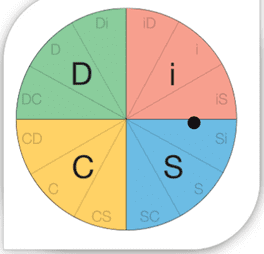
Truth: DiSC measures so much more. While other assessments label individuals in one of a handful of categories, DiSC identifies an individual’s primary—and secondary—style. So instead of simply identifying participants as having a “D,” “i,” “S,” or “C” style (for Dominance, Influence, Conscientiousness, and Steadiness), DiSC notes their style as CD, Si, and so on. It’s a more layered approach to reflect that no individual has a “one-note” personality.

DiSC is differentiated even further by diving deeper into the intensity of each participant’s personality. With an individual’s results plotted as a dot on a graph like the one here, the location of the dot is very telling. Is your dot toward the edge of the circle? If so, then your personality is firmly in the identified style. Is your dot towards the center of the circle? In that case, you have those characteristics to a lesser degree.

Circular DiSC Model

Do you have questions? You can find common DISC questions and answers here.

To learn more, please email us at learn@corexcel.com.

Is Office Drama Costing You? | Webinar

Explore Everything DiSC Productive Conflict!

Conflicted People

However you think of conflict, it comes down to a difference of opinion involving strong emotions. Whether it’s a brief, explosive dispute or subtle, long-lasting issue, we’ve all done things in these moments that derail conversations and destroy our relationships.

Ever wonder why? Are we bad people, unable to control ourselves?

There is an explanation and it’s roots are in the cognitive behavioral model. Hidden inside us are our thoughts, often unconscious. Many times we’re unaware of these thoughts until we react in ways that have negative consequences. Gaining awareness of these thoughts, making better choices and changing our responses contributes to our overall emotional intelligence quotient.

In this session, we’ll explore how the Everything DiSC Productive Conflict program can help you and your team gain the emotional intelligence you need to engage in positive conflict and succeed in today’s workplace.

Date:  September 26, 2018

Contact us to request the webinar recording