In today’s hiring environment, companies often focus heavily on technical skills, experience, and education. While those factors are important, one quality still stands above the rest when it comes to long-term success: work ethic. Employees with a strong work ethic show up ready to contribute, stay accountable for their responsibilities, and push through challenges when things get difficult.
Work ethic drives consistency.
Skills can be taught, but attitude and effort are much harder to instill. Employees with strong work habits are dependable, motivated, and willing to go the extra mile to get the job done right. They take ownership of their work and remain focused even when tasks become repetitive or demanding.
It impacts team performance.
A strong work ethic doesn’t just benefit individual productivity—it influences the entire team. Employees who consistently put in the effort set a positive standard for their coworkers. They help build a culture of accountability, reliability, and collaboration that leads to stronger overall performance.
It improves retention.
When organizations hire people who value responsibility and effort, they often see better engagement and longer employee tenure. These employees are more likely to take pride in their work and stay committed to the organization’s goals.
How the Step One Assessment Helps
Identifying work ethic during the hiring process can be challenging through resumes and interviews alone. That’s where the Step One Assessment becomes a valuable tool.
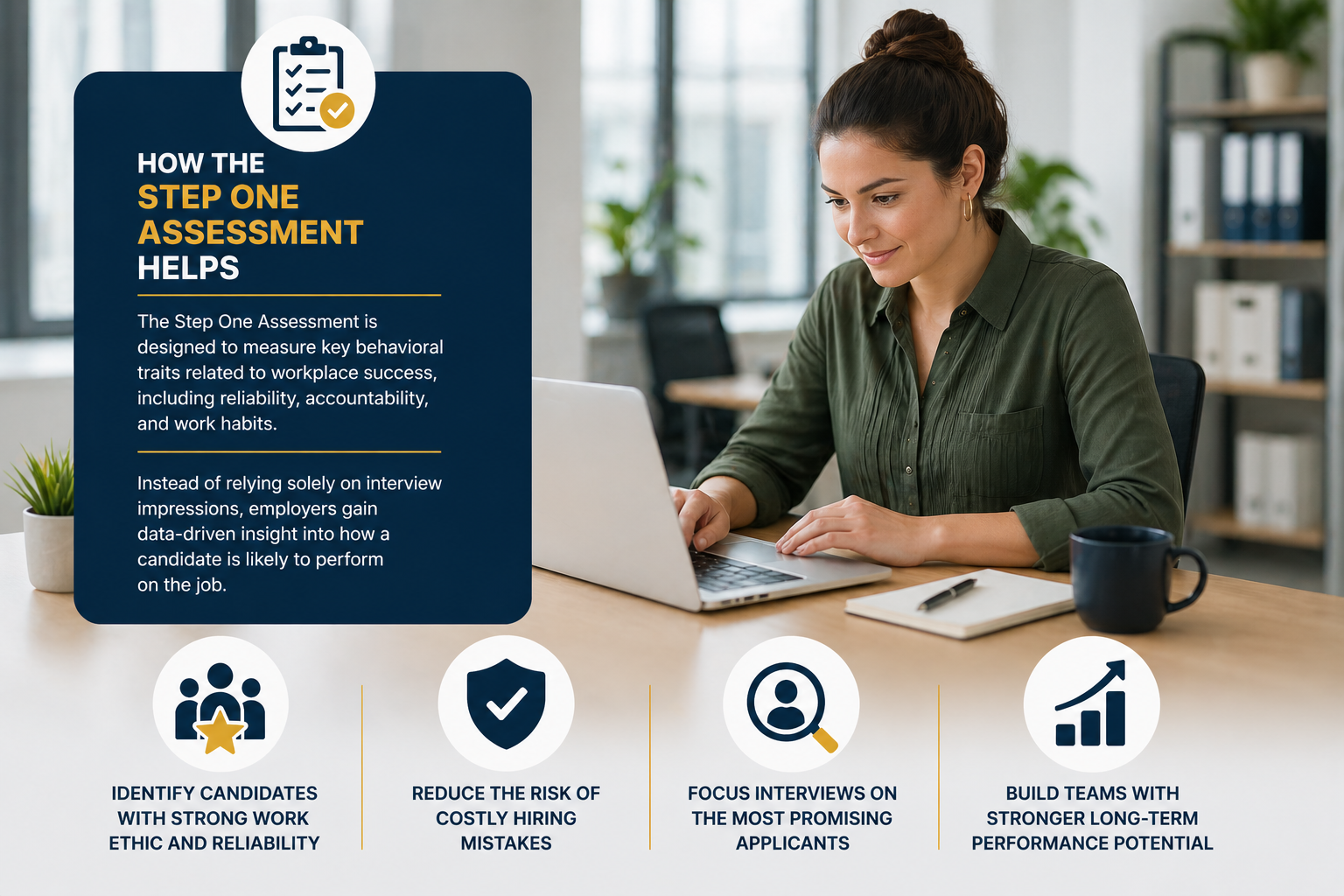
The Step One Assessment is designed to measure key behavioral traits related to workplace success, including reliability, accountability, and work habits. Instead of relying solely on interview impressions, employers gain data-driven insight into how a candidate is likely to perform on the job.
By using the Step One Assessment early in the hiring process, organizations can:
- Identify candidates with strong work ethic and reliability
- Reduce the risk of costly hiring mistakes
- Focus interviews on the most promising applicants
- Build teams with stronger long-term performance potential
Final Thoughts
In a competitive labor market, it’s tempting to prioritize speed and technical qualifications. However, employees who consistently demonstrate a strong work ethic often become the most valuable members of a team. Tools like the Step One Assessment help employers identify those qualities early, making it easier to hire people who will show up, work hard, and contribute to long-term success.